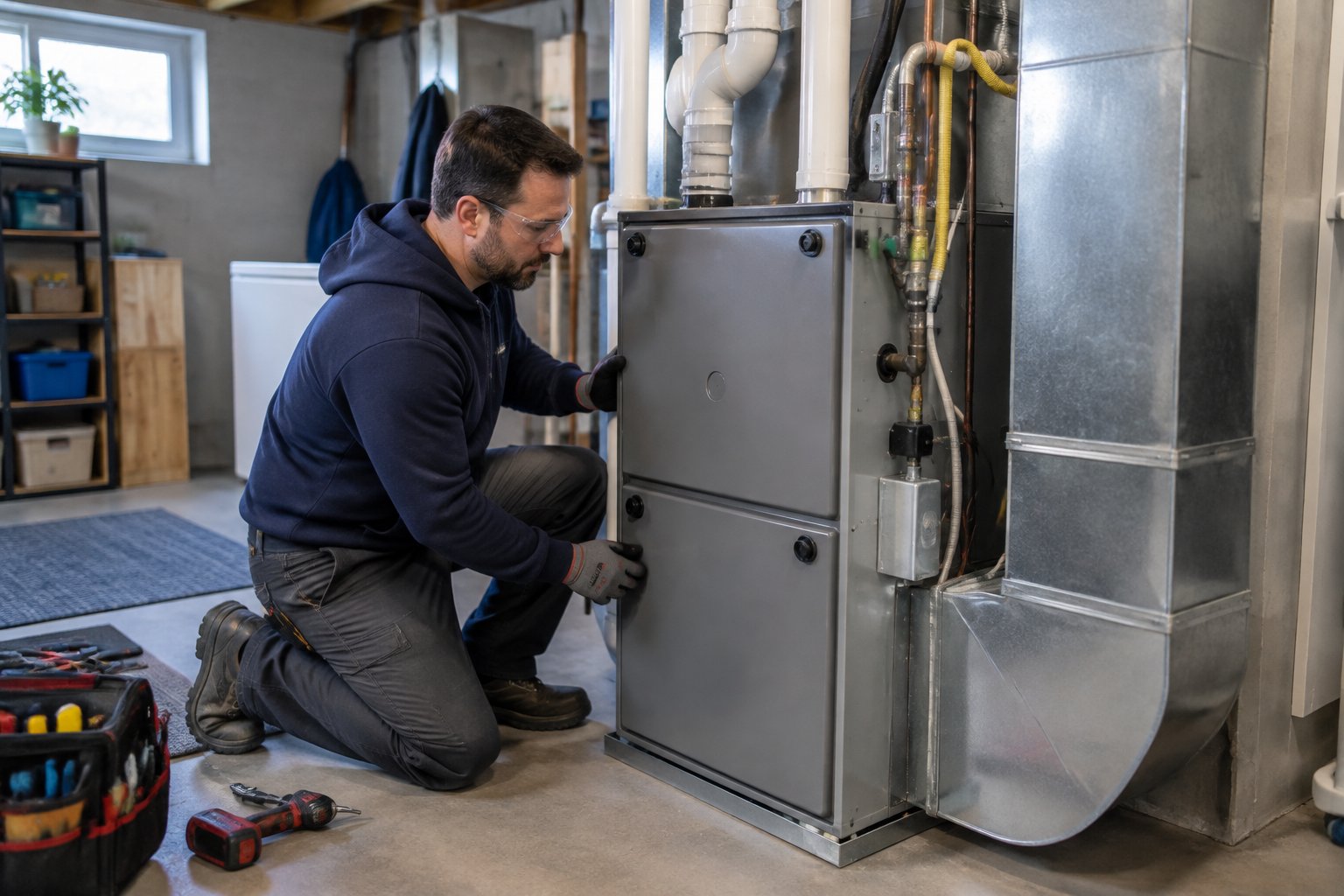
Furnace Installation in Tillsonburg: Costs and Choices
Replacing a furnace in Tillsonburg comes down to three choices: the right fuel for your home, a size based on a real load calculation, and a quote that spells out every part of the job.
For most Tillsonburg homes on natural gas, a properly sized high-efficiency gas furnace is the dependable choice, but your final installed price depends on your ductwork, venting, and the condition of your current setup.
Published local price ranges give you a starting point. One 2026 estimate puts furnace installation in Tillsonburg between $2,375 and $6,175, with an average near $4,275. Your home can land outside that range, so treat any number you see online as a rough benchmark.
If you work with B.R.’s Plumbing and Heating or any other installer, you will make a better decision when you know which parts of the job drive cost. You will also know which questions to ask before you sign.
When Is a New Furnace the Right Choice?
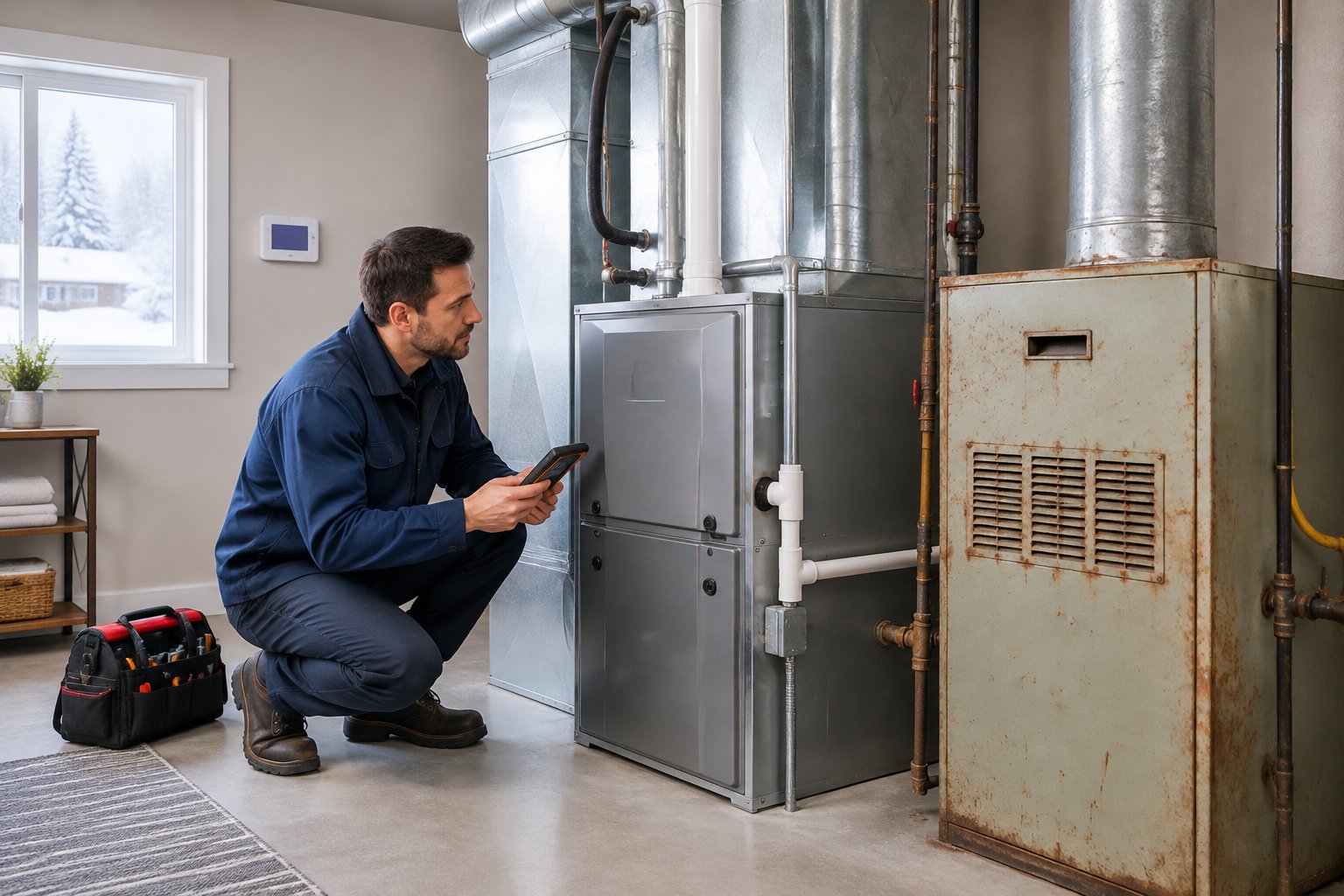
A new furnace makes sense when safety problems, repeat breakdowns, or poor heating show up together in an aging unit. One repair on an otherwise healthy furnace is a different situation from a third service call in a year on a unit that is 15 or more years old.
Signs Your Furnace May Need Replacing
Some warning signs point strongly toward replacement. A cracked heat exchanger is the most serious one, because it can let combustion gases, including carbon monoxide, into your living space. Most technicians will not patch it.
Other signs build up over time:
- Rising gas bills with no change in how you use your home
- Uneven heat, with some rooms always colder than others
- Short-cycling, where the furnace turns on and off every few minutes
- Loud banging at startup, which points to delayed ignition
- No heat on the coldest nights, even though the furnace keeps up in mild weather
Some of these, like short-cycling or cold rooms, can trace back to a furnace that was the wrong size from day one. In that case, replacement gives you a chance to fix the original mistake.
When Repair May Still Make Sense
Repair is the sensible call when the fault is confirmed, limited to one part, and the rest of the system is in good shape. A failed igniter or flame sensor on a furnace that is 8 years old is a normal repair.
Ask your technician these questions before you approve the work:
- What exactly failed, and was it tested or guessed?
- Are other major parts showing wear?
- Are replacement parts still easy to get for this model?
- Has this same problem happened before?
If the answers point to repeated failures or damage on the combustion side, put the repair cost toward a new unit.
Why Planning Before Winter Helps
Booking in late summer or early fall gives you time to compare quotes and check rebates. You can also fix ductwork or venting issues without rushing.
When a furnace fails in January, you often take the first unit available. Planning ahead lets you pick the right size and efficiency on your own schedule. If your furnace is near the end of its life, an assessment in October costs you little and gives you options.
How Do You Choose the Right Furnace?
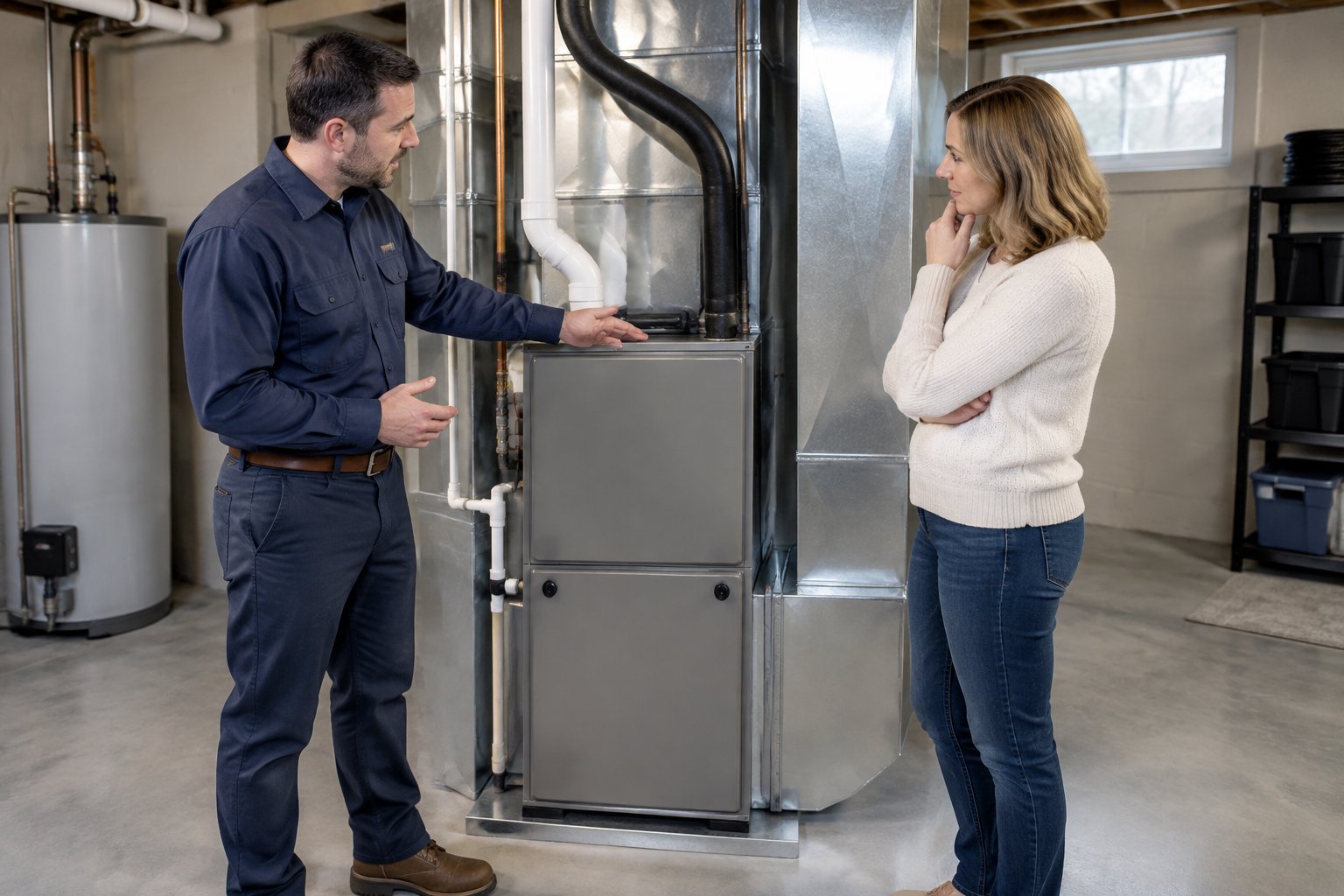
The right furnace matches the fuel you have access to, fits your home’s measured heating load, and offers comfort features you will use. Fuel decides most of your running costs, sizing decides comfort, and efficiency decides how much of each dollar becomes heat.
Gas, Propane, and Electric Options
Natural gas is the most common choice in Ontario because it offers a good balance of efficiency and operating cost. If your street has a gas line, a gas furnace is usually the practical starting point.
Propane works well for rural properties around Tillsonburg without gas service. It needs an on-site tank and its own supply lines, which add to setup.
Electric furnaces cost less upfront and need little maintenance, but they cost more to run in a Southwestern Ontario winter. B.R.’s Plumbing and Heating also describes hydro furnace systems as an option for some homes, so ask whether that setup suits your house and water heater.
| Fuel | Upfront cost | Running cost | Extra needs |
|---|---|---|---|
| Natural gas | Moderate | Lower | Gas line, venting |
| Propane | Moderate | Higher | Tank, supply lines |
| Electric | Lower | Higher | Electrical capacity |
Sizing the System for Your Home
Correct sizing comes from a heat load calculation, which looks at square footage, insulation, windows, ceiling height, and air leaks. A rough rule of thumb of 25 to 30 BTUs per square foot gives you a ballpark, but it misses the details of your house.
An oversized furnace heats fast, shuts off early, and leaves cold spots. An undersized one runs nonstop and falls behind on the coldest days.
A good sign is a technician who measures rooms, looks at your windows, and asks about drafty areas. If a quote is based only on the size of your old furnace, ask how they confirmed it was right.
Efficiency Ratings and Comfort Features
Furnace efficiency is shown as AFUE, the share of fuel that becomes heat. A 96% AFUE furnace turns 96 cents of every fuel dollar into heat.
Comfort features to compare:
- Two-stage or modulating burners run at lower output most of the time, which gives steadier heat.
- Variable-speed blowers move air gently and quietly, and they help with even temperatures.
- Smart thermostats let you lower the heat when you are away.
- Filtration and humidifiers help with dust and dry winter air.
The top model is not always the best value. A mid-range high-efficiency unit with a variable-speed blower often suits a typical Tillsonburg home well.
What Affects the Installed Cost?
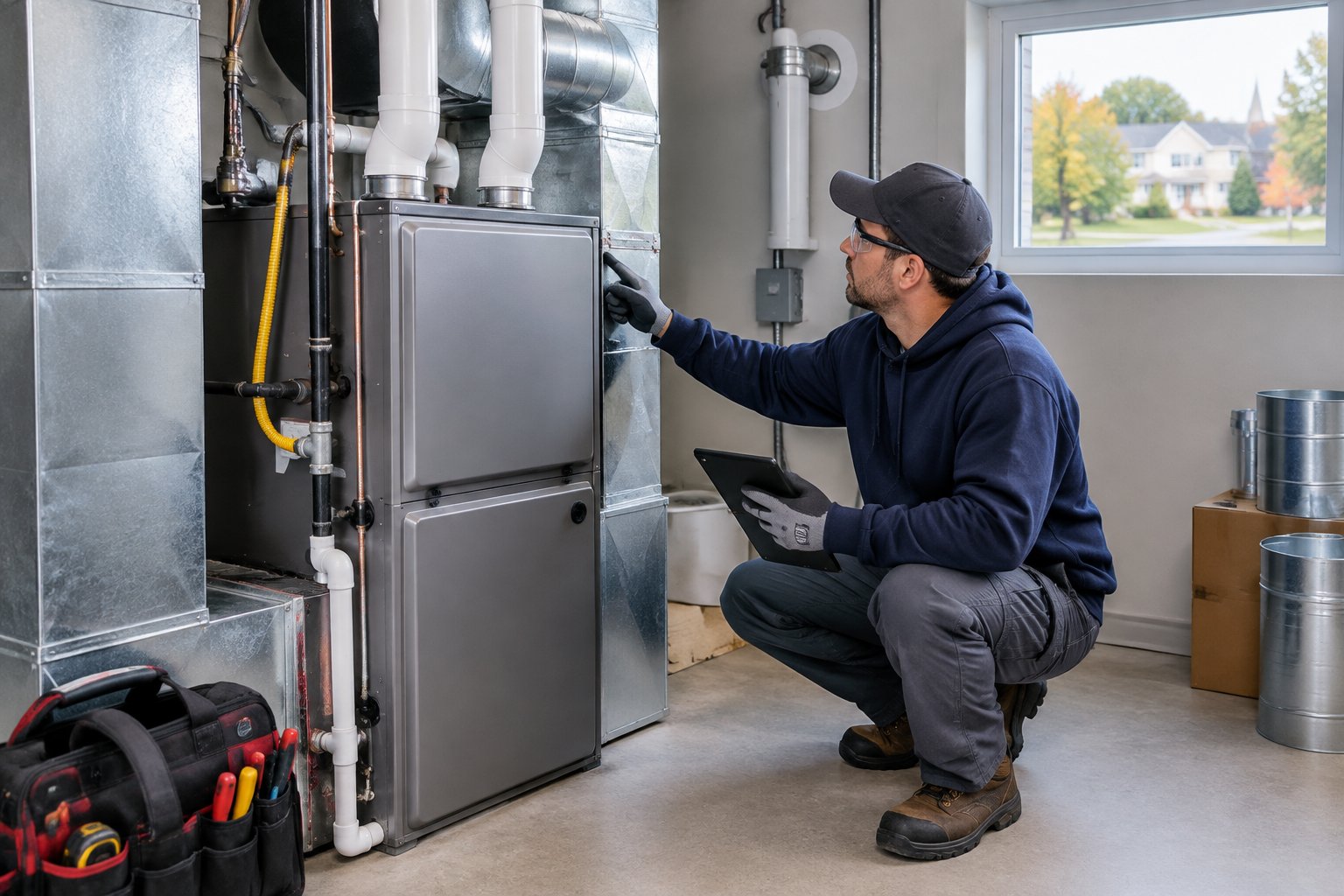
Your installed cost is the furnace plus labour, plus whatever your home needs to support it. Two homes buying the same model can get very different quotes because of venting, gas lines, ducts, and access.
Equipment and Installation Costs
The furnace itself is the largest share of the bill. One Ontario breakdown puts the furnace unit at 40% to 60% of the total, with labour at 25% to 40%. Venting and gas lines make up 10% to 20%, and permits and safety parts take 3% to 10%.
Equipment price rises with efficiency, capacity, and brand. Labour rises when the furnace room is tight, the basement is hard to reach, or the old unit is difficult to remove.
Removing and disposing of your old furnace is part of the job too. Older oil systems can add tank decommissioning work.
Ductwork, Venting, and Other Home Upgrades
These are the items that change a quote most often:
- Venting: Moving from a standard furnace to a high-efficiency condensing model means switching from a metal flue to PVC pipe. Condensing units produce cooler exhaust that would corrode a metal chimney liner.
- Condensate drain: High-efficiency furnaces produce water, so you need a floor drain nearby or a condensate pump.
- Ductwork: Leaky or undersized ducts in older homes can need sealing or resizing to get proper airflow.
- Gas lines and electrical: Some homes need a new gas line, a dedicated circuit, or other updates to meet current Ontario codes.
An older home with original ducts can spend an extra day on sealing work. Ask your installer to inspect ducts and venting before quoting, so these items show up on paper first.
Rebates, Financing, and What to Confirm in a Quote
Rebates and financing change often, so confirm current details before you buy. Utility and government programs open, close, and change rules from year to year, and eligibility can depend on the model, your fuel, and whether you need an energy assessment first.
When you ask B.R.’s Plumbing and Heating or any installer for a quote, check that it lists:
- Make, model, capacity (BTU), and AFUE rating
- Venting, drain, and gas line work
- Any duct sealing or changes
- Thermostat and accessories
- Removal and disposal of the old unit
- Permit and inspection handling
- Manufacturer and labour warranty terms
Ask directly whether your chosen model qualifies for any current rebate, and whether the company offers financing and on what terms. Get those answers in writing.
What Happens During Installation?
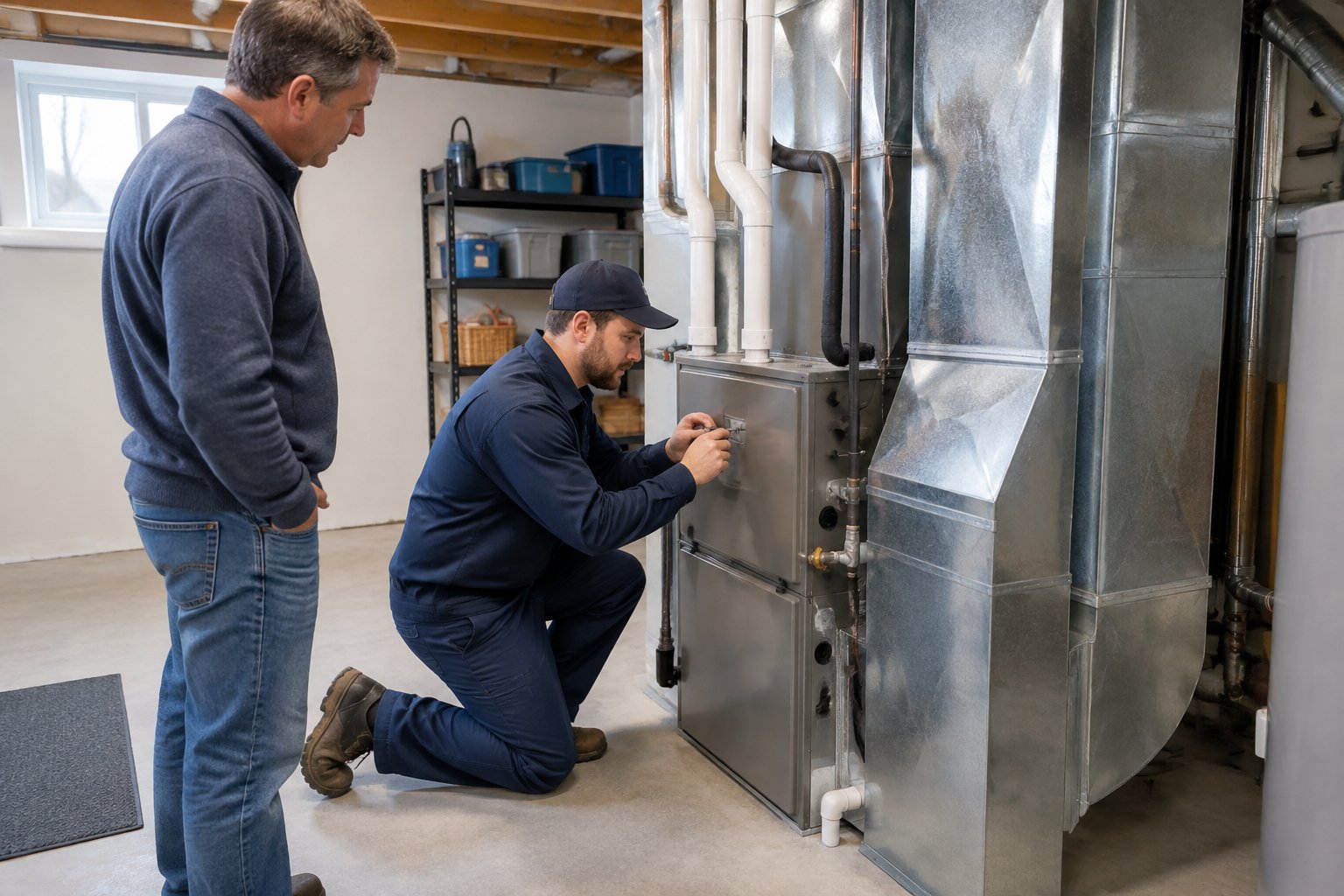
Installation runs in three stages: an assessment to pick the right equipment, a day of removal and setup with safety testing, and a handover where you learn how the system works. Most of the risk in a furnace job sits in the first and second stages, which is where careful work pays off.
Home Assessment and Equipment Selection
The assessment is where the technician measures your home and looks at your current system. Expect them to check the furnace room, ducts, venting path, gas supply, and electrical panel.
You should leave this visit with a size recommendation tied to a load calculation and a clear list of any extra work. Have your utility bills handy and point out rooms that never feel warm. Those details help the installer catch duct or airflow issues.
Removal, Installation, and Safety Checks
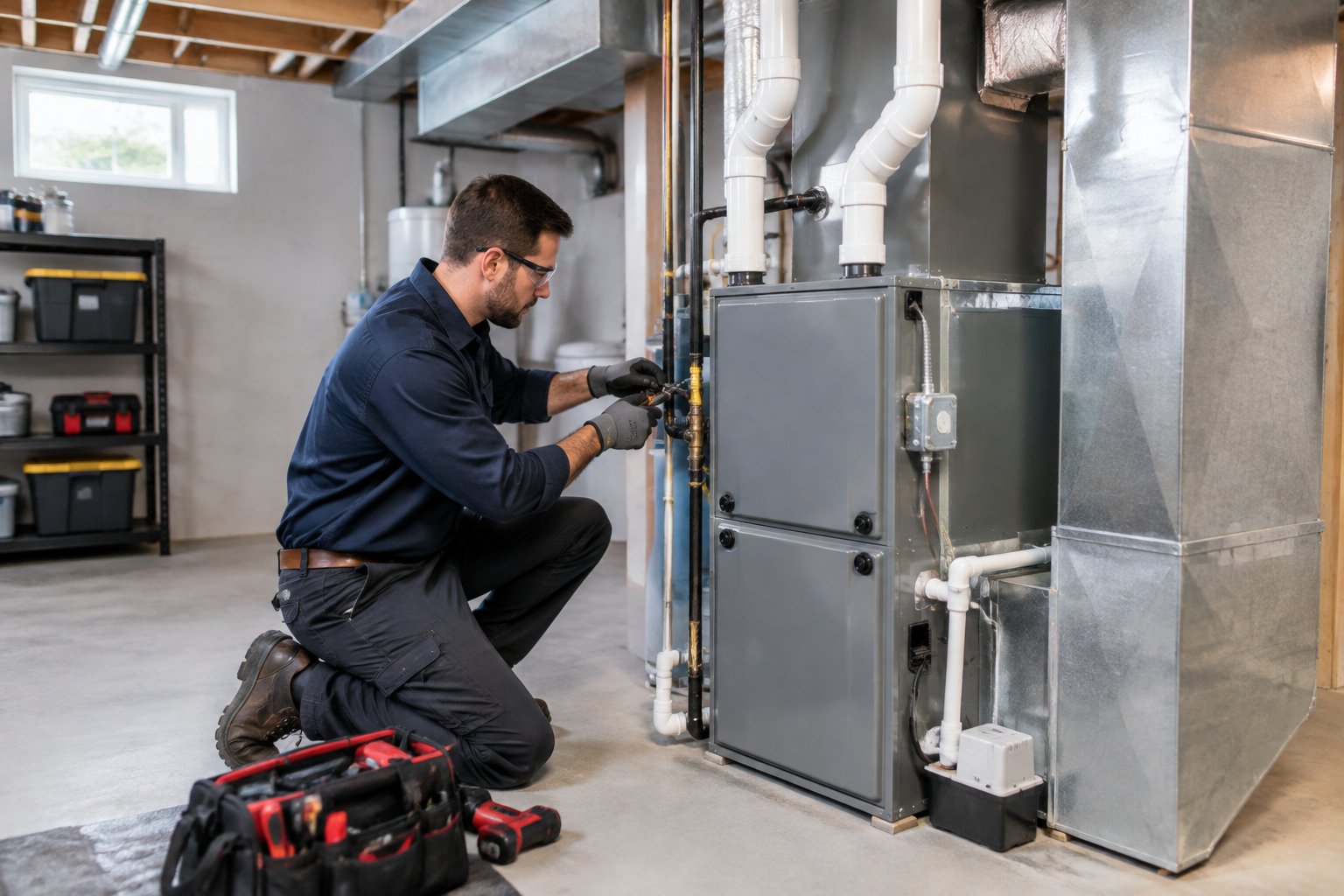
On installation day, the crew shuts off gas and power, removes the old furnace, and sets the new unit in place. They then connect ducts, gas, venting, the condensate drain, and the thermostat.
In Ontario, gas appliance work must be done by a licensed gas technician registered with the Technical Standards and Safety Authority (TSSA). Ask your installer to confirm their technician’s licence.
Before they leave, the technician should:
- Test for gas leaks at every connection
- Set gas pressure to the manufacturer’s spec
- Check that venting draws properly
- Confirm clean ignition and correct airflow
- Run the furnace through full heating cycles
A straightforward swap can finish in about five hours. Jobs with venting or duct changes can run into a second day.
System Handover and Ongoing Maintenance
At handover, the technician should show you how to use the thermostat, change the filter, and spot warning signs. Ask where the shutoff switch and gas valve are located.
Keep your paperwork together: the model and serial numbers, warranty registration, and any permit records. Many manufacturers require you to register within a set time to get full warranty coverage.
From there, plan on yearly service. B.R.’s Plumbing and Heating lists furnace maintenance plans with inspections, cleanings, and tune-ups, so ask what each visit covers and how it fits your warranty terms.
Plan a Furnace Replacement That Fits Your Home
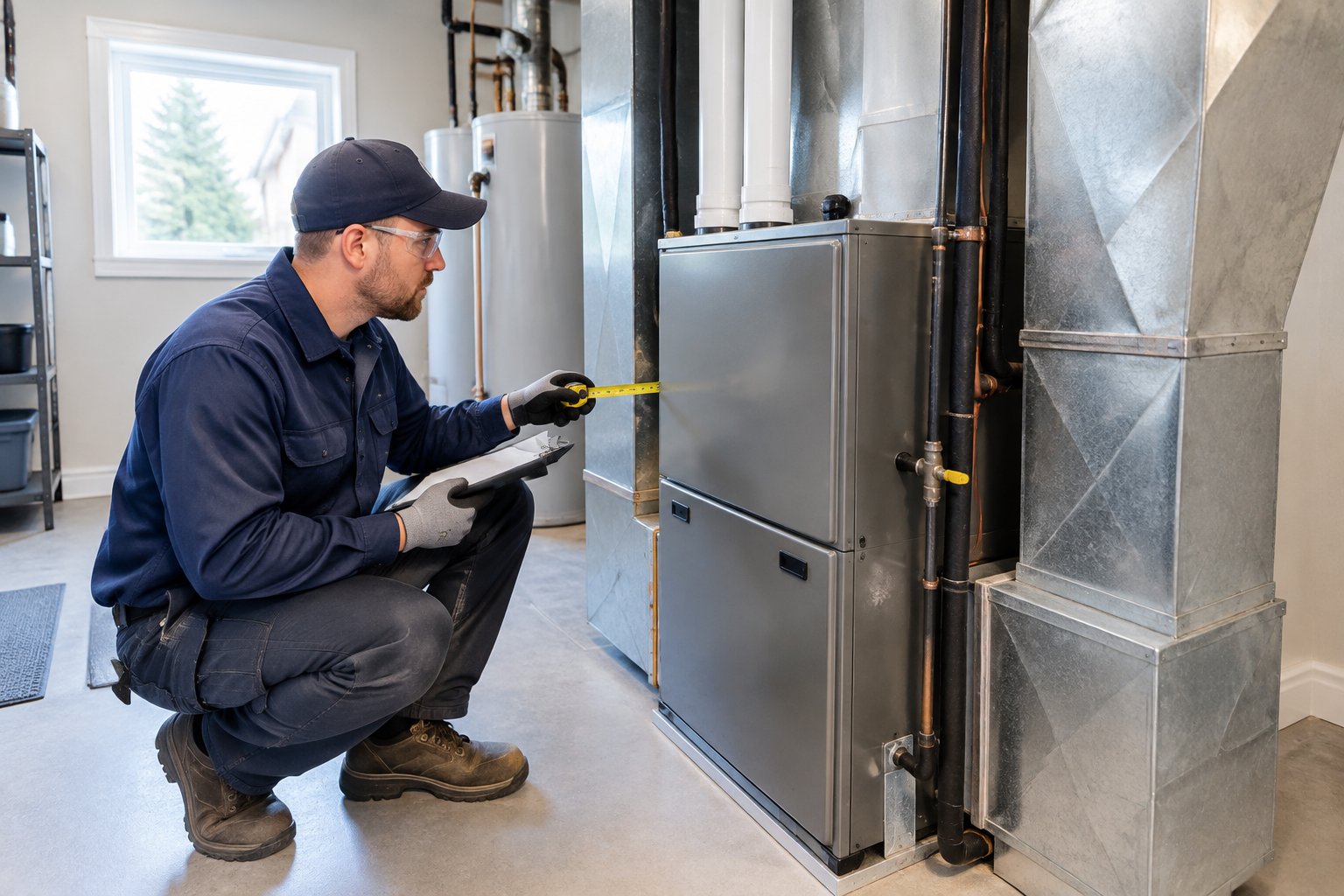
A good replacement starts with your home’s needs and ends with a quote you can read line by line. Start with your fuel, size the furnace with a load calculation, and choose an efficiency level and blower type that suit how you live.
Expect your price to move with venting, drain needs, ductwork, and access. Published ranges help you spot a quote that looks far off, but your own home sets the final number.
Before you book, line up these steps:
- Book an in-home assessment before the cold sets in.
- Ask for an itemized quote with model, BTU, and AFUE listed.
- Confirm the gas technician’s TSSA licence and how permits will be handled.
- Check current rebate eligibility and financing terms in writing.
- Register your warranty and schedule yearly service after installation.
Frequently Asked Questions
How long does furnace installation usually take?
A simple furnace swap often takes one day, and some finish in about five hours. Jobs that need new PVC venting, duct sealing, or gas line work can run into a second day.
Can a new furnace be installed during winter?
Yes, furnaces are installed all winter. The main drawbacks are longer wait times during cold snaps and less time to compare options, so booking in the fall gives you more choice.
Do I need a permit to replace a furnace in Tillsonburg?
Requirements depend on the scope of the work, so confirm with your installer and the Town of Tillsonburg’s building department. Gas work in Ontario must be done by a TSSA-licensed gas technician, and your installer should explain which permits or inspections apply to your job.
Can I replace a gas furnace with a propane or electric model?
Yes, you can switch fuels, but each change brings extra work. Propane needs a tank and supply lines, while electric may need upgraded wiring or panel capacity, so ask for these costs in your quote.
How often should a newly installed furnace be serviced?
Plan on professional service once a year, ideally in the fall before heavy use. Change or check your filter every one to three months, and follow the manufacturer’s service rules to keep your warranty valid.


